


EduZ Tuition Blog
Gifted Education for All? Decoding MOE's Radical Shift in Gifted Education
Gifted Education for All? Decoding MOE's Radical Shift in Gifted Education
At Eduz Tuition, we've been closely following the recent changes to Singapore's Gifted Education Programme (GEP) which is set to undergo a major overhaul, affecting how our primary schools nurture high-ability learners. From 2024, the Ministry of Education (MOE) will implement changes that expand opportunities for gifted students while keeping them in their current schools. These updates promise to redefine gifted education in Singapore, potentially impacting up to 10% of each cohort. Whether you're a parent of a GEP student, have a child showing promise in specific subjects, or are simply interested in our education system's evolution, these changes could significantly influence your child's learning journey. Let's delve into what this new approach to gifted education means for Singapore's students, parents, and educators.

Key Changes to the Gifted Education Programme
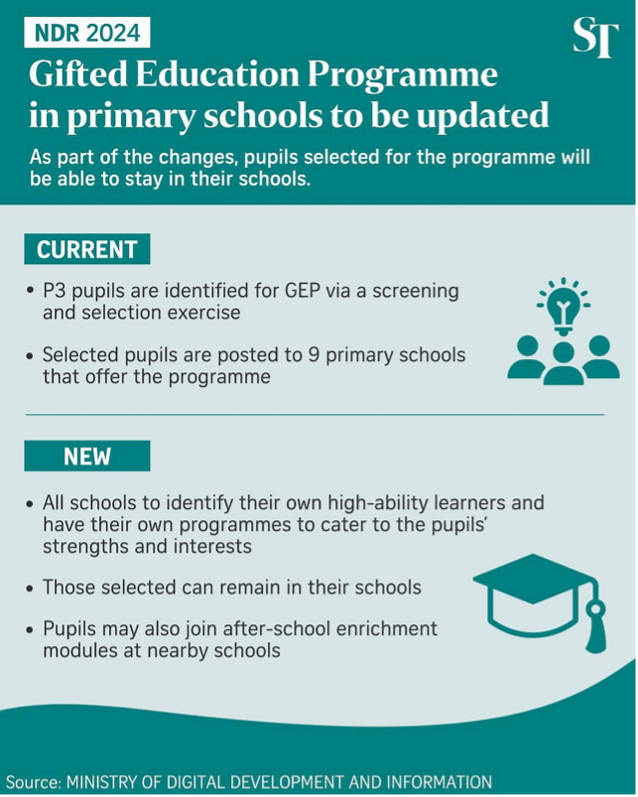
- Decentralization of Gifted Education. No longer limited to nine primary schools, all primary schools will now be equipped to identify and support high-ability learners.
- More Students Included. The programme will now benefit 10% of students, up from 8%, giving more students access to advanced learning opportunities.
- Students Remain in Their Current Schools. Selected students will no longer need to transfer to specific GEP schools. This addresses a common concern among parents about maintaining their child's social connections and familiar environment.
- Introduction of After-School Enrichment Modules. For students who would benefit from additional challenges, after-school modules will be available at designated nearby schools. These sessions, typically once a week, will focus on fostering curiosity and a love for learning rather than exam preparation.
- Implementation Timeline. The current GEP will be phased out starting with the 2024 Primary 1 cohort. Students entering Primary 3 in 2026 and Primary 4 in 2027 will be the first to experience the new programme fully.
A New Selection Process: More Holistic Approach
The revamped selection process aims to be more inclusive and flexible:
- Primary 3 Screening Test: The initial assessment of English and Mathematics capabilities will be retained.
- Elimination of Second-Stage Test: The current second stage of GEP selection will be discontinued, reducing stress on students.
- Ongoing Identification: Students can be identified for high-ability programmes at multiple points between Primary 4 and Primary 6, allowing for recognition of late bloomers.
- Holistic School-Based Assessment: Teachers will play a crucial role in identifying suitable students through daily observations, classwork performance, and demonstrations of exceptional skills.
- Subject-Specific Selection: Students can be chosen for high-ability programmes in one or more subjects based on their individual strengths.
Common Concerns
- Quality of Education Across Schools. Many parents worry whether their neighbourhood school can provide the same quality of gifted education as the current GEP schools. MOE emphasized that resources, including experienced teachers, will be shared across all schools. They're committed to ensuring that high-quality education is accessible regardless of the school a child attends. However, it's important to recognize that this will be a gradual process, and parents should stay engaged with their schools to understand how these changes are being implemented.
- Student Stress Levels. A key aim of the new system is to reduce stress by allowing students to develop at their own pace and in their areas of strength. It's less about excelling in every subject and more about nurturing individual talents. This shift might actually help alleviate some of the pressure students feel to be "all-rounders." However, it's crucial for parents to adjust their expectations accordingly and support their children's individual growth journeys.
- Social and Emotional Development. Keeping gifted students in their current schools aims to support their social-emotional growth. This addresses a common concern about GEP students being isolated from their peers. However, some parents worry whether their children will still have opportunities to interact with like-minded peers. The after-school enrichment modules are designed to provide these opportunities while maintaining a balance with regular school life.
- Identification of Gifted Students. The new approach to identifying gifted students is more holistic, which some parents find reassuring while others worry it might be less objective. It's important to understand that this method aims to recognize a wider range of talents and abilities, potentially benefiting students who might have been overlooked in the past. Parents should familiarize themselves with the new identification process and maintain open communication with teachers about their child's progress.
- Preparation for GEP. With the changes, the focus is shifting away from test preparation towards nurturing natural talents and curiosity. This might be a significant mindset shift for many parents accustomed to the idea of "preparing" for GEP selection. While it's natural to want to support your child's learning, excessive tutoring or "hot housing" is discouraged as it may not align with the new approach to identifying and nurturing gifted students.
- Long-term Academic Competitiveness. Some parents express concern about whether these changes might affect Singapore's educational standards and global competitiveness. It's important to note that the goal of these changes is not to lower standards, but to nurture talents more effectively and inclusively. The focus on developing critical thinking, creativity, and subject-specific strengths aims to prepare students for the challenges of the future workforce.
- Teacher Preparedness. The new system places significant responsibility on teachers to identify and nurture high-ability learners. While this raises concerns about teacher workload and preparedness, MOE is planning additional support, including training and resources. Parents can support this transition by maintaining respectful and collaborative relationships with teachers, recognizing the complexity of their role in this new system.
Potential Impact on Students
- More Inclusive Approach: A larger percentage of students will have access to advanced learning opportunities.
- Reduced Stress: Eliminating school transfers and reducing focus on selection tests may decrease stress for students and parents.
- Tailored Development: The new system allows for more personalized approaches, catering to students who excel in specific subjects.Making General Paper compulsory ensures all JC students build critical language and thinking skills needed for university.
- Stay Informed: Keep up-to-date with MOE announcements and your school's implementation plans.
Preparing Your Child for the New System
- Open Communication: Discuss these changes with your child, addressing any questions or concerns they might have.
- Encourage Exploration: Support your child in exploring various subjects and activities to discover their passions and strengths.
- Foster Independent Learning: Help your child develop self-directed learning skills, which will be valuable in this more flexible system.
- Stay Informed: Keep up-to-date with MOE announcements and your school's implementation plans.
The revamped GEP represents a significant shift towards a more inclusive and flexible approach to nurturing high-ability learners in Singapore. While challenges in implementation may arise, the focus on individual strengths, reduced stress, and broader access to advanced learning opportunities are positive steps forward.
At Eduz Tuition, we see great potential in these changes to create a more supportive environment for all learners. As we navigate this transition together, let's focus on fostering a love for learning and supporting our children's unique journeys. By working collaboratively with schools and embracing these changes, we can help ensure the success of this new approach to gifted education in Singapore.
Remember, every child has unique gifts and talents. Our role as parents and educators is to help them discover and nurture these abilities, preparing them not just for academic success, but for a fulfilling life ahead.
Source:
- Channel News Asia - FAQ: What you need to know about Singapore’s revamped Gifted Education Programme
- The Straits Times - NDR 2024: Gifted Education Programme to be updated; all primary schools to stretch high-ability pupils
- The Straits Times - NDR 2024: Extra support for schools among key changes to the education landscape
- Ministry of Education (MOE) - Gifted Education Programme
Have questions? Contact EduZ Tuition today.
Chat with us now