


EduZ Tuition Blog
Change in PSLE syllabus: Everything you need to know
Change in PSLE syllabus: Everything you need to know
In 2021, a significant overhaul of the Primary School Leaving Examination (PSLE) scoring system was implemented to reduce the emphasis placed on academic outcomes. Consequently, the previous T-score system, which was familiar to most, will be replaced by a more diverse range of scores.
1. Old vs new T-score system
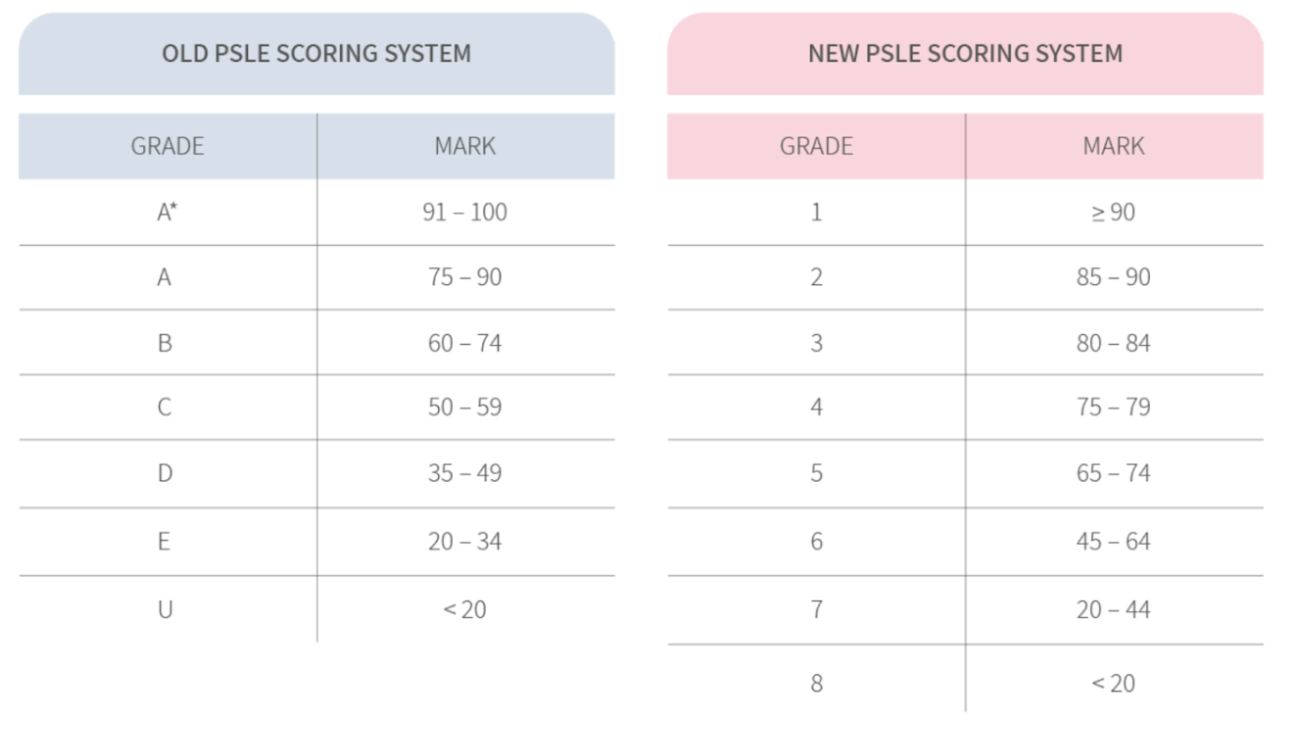
The updated PSLE scoring system, implemented in lieu of numerical T-scores or letter grades (A-star to F), assigns each examinable subject an Achievement Level (AL) with a score range of 1 to 8, where 1 represents the highest and 8 the lowest level of achievement. Each student will receive a total PSLE score between 4 and 32 based on the ALs obtained across all examinable subjects.
It is worth noting that each AL is associated with a particular grade range, as indicated in the table below, reflecting a departure from the previous scoring system.
2. Subject based banding
The Ministry of Education (MOE) has announced a significant change to the PSLE syllabus with the introduction of subject-based banding. Beginning in 2024, students entering secondary schools will be sorted into three groups based on their strengths in individual subjects, rather than relying solely on their overall scores. As a result, students who excel in specific subjects will be placed in higher-level classes for those subjects, irrespective of their overall PSLE score. This shift is intended to accommodate the diverse learning styles and strengths of students, allowing them to pursue their interests and develop their talents

3. Skills based approach
The updated PSLE syllabus features a significant shift towards a skills-based approach to learning, prioritising the development of students' critical thinking, problem-solving, and communication skills. This change aligns with the demands of the 21st century, which require individuals to be adaptable and flexible to succeed. Rather than focusing on memorization, students will be evaluated based on their practical application of skills in real-world contexts.
Furthermore, the revised syllabus emphasises interdisciplinary learning, encouraging students to draw connections between different subjects and apply their knowledge in innovative and creative ways. This approach aims to foster creativity and promote the ability to think beyond the conventional boundaries of individual subjects.
Conclusion
In summary, the revisions to the PSLE syllabus signal a transformative departure from conventional educational practices in Singapore. By prioritising the cultivation of students' competencies and skills, the updated syllabus aims to equip them with the necessary tools to tackle future challenges. While the implementation of the new syllabus may pose challenges, the anticipated benefits are substantial. It is expected that the changes will lead to a generation of Singaporeans that are more versatile, resilient, and adaptable.
Have questions? Contact EduZ Tuition today.
Chat with us now